Introducing Squivr Analytics: Turn Salesforce Data Into Revenue Intelligence
Revenue teams do not need more data. They need a better way to understand the data they already have, connect it to what is actually happening across their business, and determine where to focus next. Enter - Squivr Analytics.
Coming soon, Squivr Analytics will introduce an entirely new analytics layer to the Squivr platform with full reporting, powerful Grid views, configurable dashboards, sales targets, and transparent scorecards, all built natively in Salesforce. The goal is to help customers get significantly more value from the Salesforce data they already rely on without introducing another disconnected analytics platform or moving their data outside of Salesforce.
Squivr has always focused on helping revenue teams better understand and execute within their most important accounts. Account Planning helps teams build the strategy. Relationship Intelligence helps them understand the people and relationships that matter. Whitespace helps identify where additional opportunity exists. Action Plans and Playbooks help teams turn strategy into execution. With Squivr Analytics, we are adding the intelligence layer that brings all of that together with the broader Salesforce revenue lifecycle.
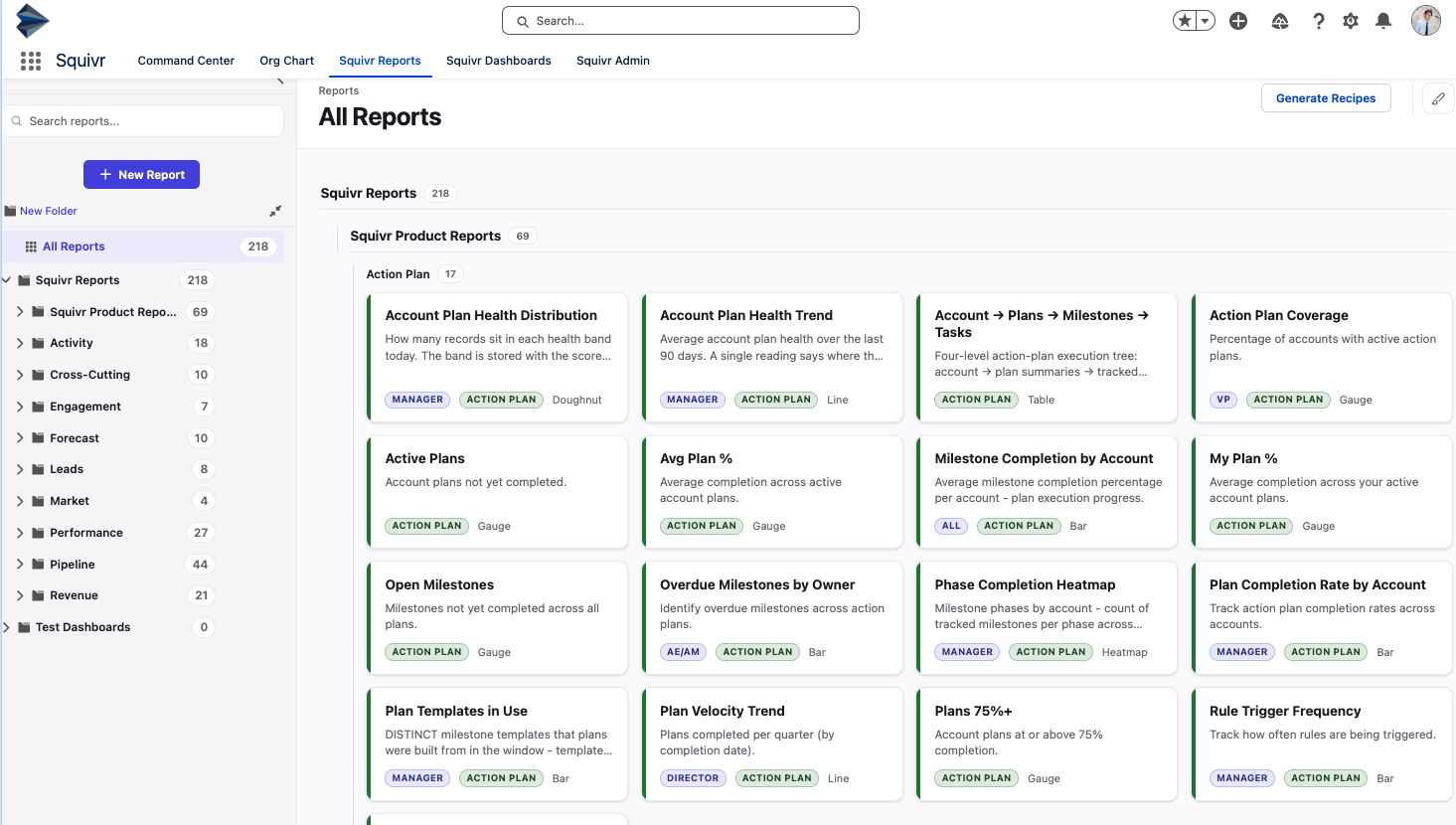
A major part of that experience will be Squivr Reports and Dashboards. Customers will be able to analyze traditional Salesforce data such as accounts, opportunities, pipeline, forecasts, leads, contacts, revenue, and activity alongside the intelligence being generated through Squivr. That means organizations can begin reporting on account plan health, milestone completion, stakeholder coverage, relationship strength, buying committee depth, whitespace and expansion opportunities, engagement, adoption, and execution alongside the traditional metrics they already use to run their business.
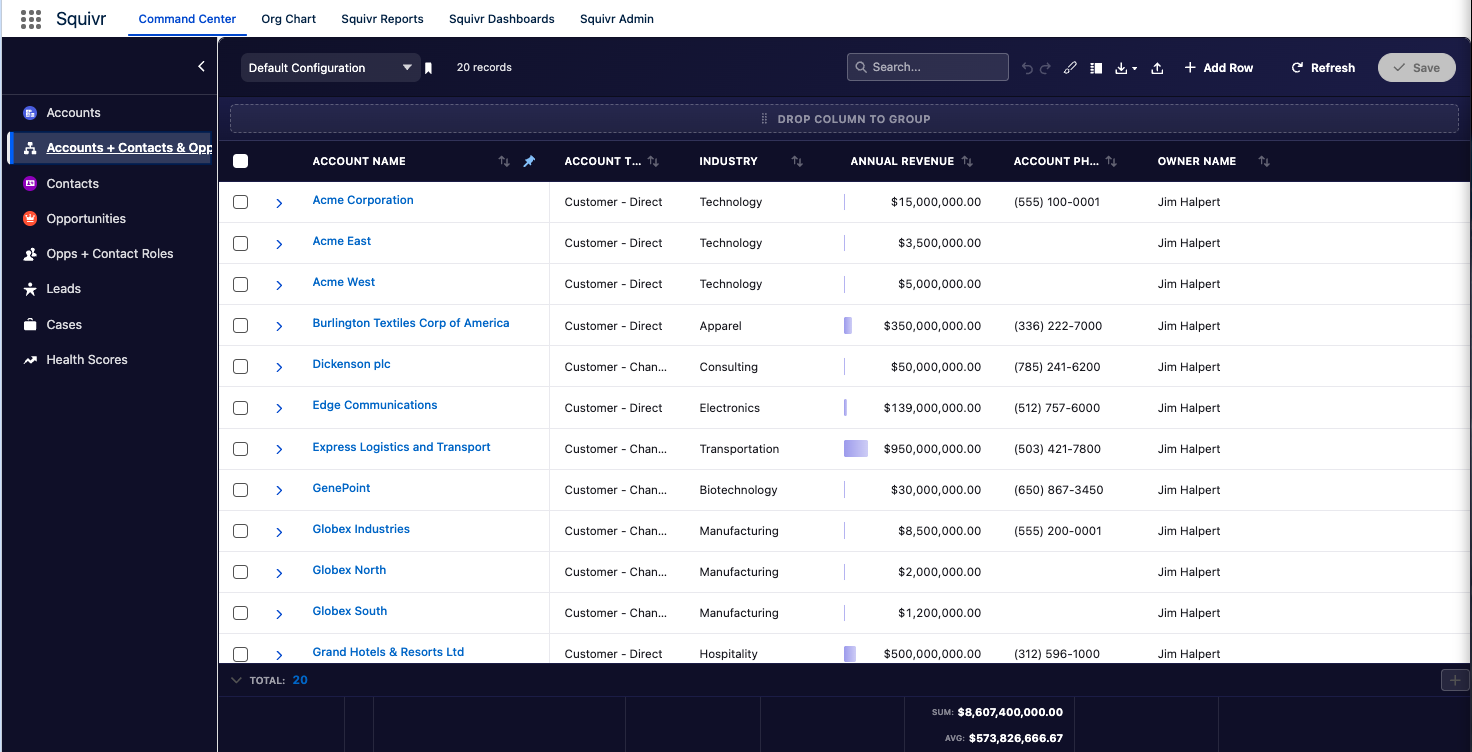
We are also introducing Squivr Grid, giving teams powerful Grid views directly within Salesforce. Grid provides a faster and more flexible way to work across larger datasets while maintaining the context of the underlying Salesforce records. Sales leaders can analyze pipeline. Managers can review accounts and opportunities. RevOps teams can inspect and manage data across the business. Sellers can quickly identify gaps across their territories and accounts. Instead of moving constantly between individual Salesforce records, Grid gives users another way to see, understand, and work with their data.
Dashboards take that information another step further. We are building dashboards around the questions different members of the revenue organization actually need answered. Executives need to understand overall business health and performance. Sales leaders need visibility into pipeline, forecasts, revenue, execution, and risk. Managers need to understand account planning progress, stakeholder coverage, relationship health, whitespace, and team activity. Sellers need to know which accounts and opportunities require their attention. Squivr Analytics will allow those different perspectives to exist within the same native Salesforce analytics experience.
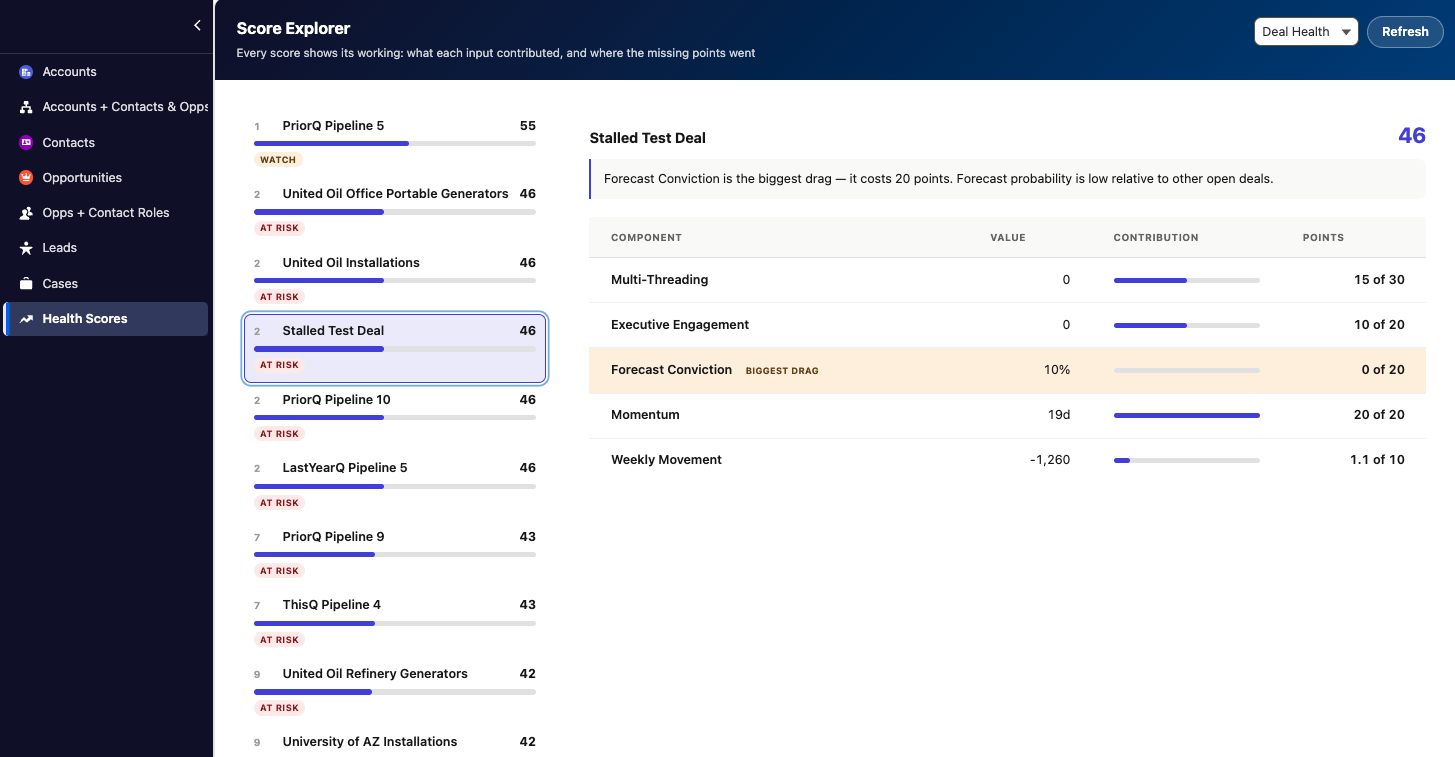
One of the areas we are especially excited about is Squivr Scoring and Scorecards. Organizations will be able to define scoring methodologies based on the signals that matter to their business and apply those methodologies across Salesforce data. A Deal Health score, for example, could incorporate multi-threading, executive engagement, forecast conviction, momentum, and weekly movement. Account health could incorporate an entirely different combination of revenue, relationship, engagement, planning, and execution signals.
More importantly, we want those scores to be understandable. Our Score Explorer is designed to show exactly what contributed to a score, how much each component contributed, and where points were lost. If an opportunity is considered at risk, a seller should be able to understand why. If an account's health score changes, a manager should be able to see what changed. We believe scoring becomes much more valuable when it helps start the right conversation rather than simply producing another number.
Squivr Analytics will also introduce Sales Targets, allowing organizations to connect analytics directly to the goals their teams are expected to achieve. Targets can be established around different measures, scopes, periods, and levels of the organization. This creates additional context around the reporting experience because teams are no longer simply looking at revenue, pipeline, or other metrics in isolation. They can understand where they are relative to where they need to be.
The real opportunity comes from bringing all of these capabilities together. Imagine looking at a pipeline dashboard and not only seeing that an opportunity has stalled, but understanding that executive engagement has dropped, the buying committee is not sufficiently multi-threaded, the opportunity has not progressed recently, and the account plan has several overdue milestones. Or identifying an account with significant whitespace while simultaneously seeing strong executive relationships, high engagement, and an active account plan. That is the type of context we want Squivr Analytics to provide.
And it is all being built natively in Salesforce. Customers can extend the value of the Salesforce data and processes they already have while bringing reporting, dashboards, Grid, scoring, targets, Account Planning, and Relationship Intelligence together in one environment. There is no need to introduce another disconnected system simply to understand what is already happening inside Salesforce.
Ultimately, Squivr Analytics represents a significant expansion of what Squivr can deliver across the revenue lifecycle. Account Planning tells you where you want to go. Relationship Intelligence helps you understand who matters. Whitespace identifies where opportunity exists. Action Plans and Playbooks help teams execute. Grid gives teams a powerful way to work with the data. Reports and Dashboards show what is happening. Scorecards help explain why. Targets show where you need to be.
Together, they help revenue teams answer three increasingly important questions:
What is happening? Why is it happening? What should we do next?
That is the next evolution of Squivr, and we are excited to bring it to our customers soon.